Planning and installation
Installing an MRI or CT system: what to assess first
A technical specification does not describe the whole project: MRI or CT installation connects equipment, building, utilities and activity sequencing.
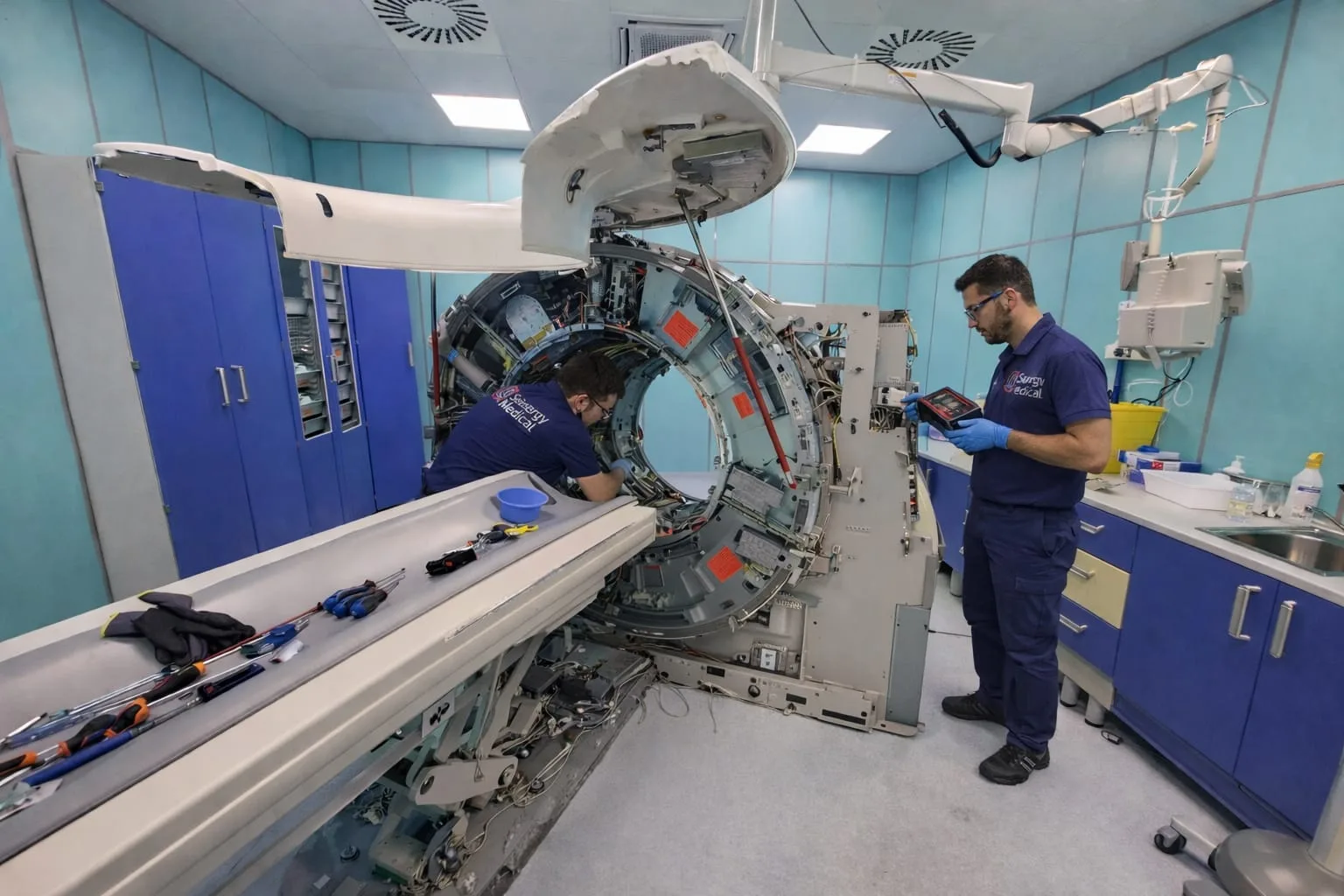
Installing an MRI or CT system connects the equipment with the building, utilities and operating activities. A technical specification alone does not describe the entire project: the access route, available facilities, technical interfaces and sequence of work must also be reviewed.
Checks vary according to the system, site and applicable information. An orderly initial collection still helps identify dependencies and stakeholders earlier.
Identify the actual machine
Manufacturer and model must be accompanied by the effective configuration and available documentation. Dimensions, weights, modules, accessories and requirements may vary between versions in the same family.
For a used system, distinguish data about the specific machine from general product information. Anything not confirmed should remain explicitly open.
Collect information on the room and adjacent areas
Plans, measurements, room purpose and the status of building work are the starting point. The final equipment position is not the only consideration: manoeuvring space, technical areas, passageways and possible interfaces with facility operations also matter.
Recent photographs, main dimensions, floor information and details of crossed areas are useful for the first discussion. Their adequacy must still be checked for the project.
Assess the moving route
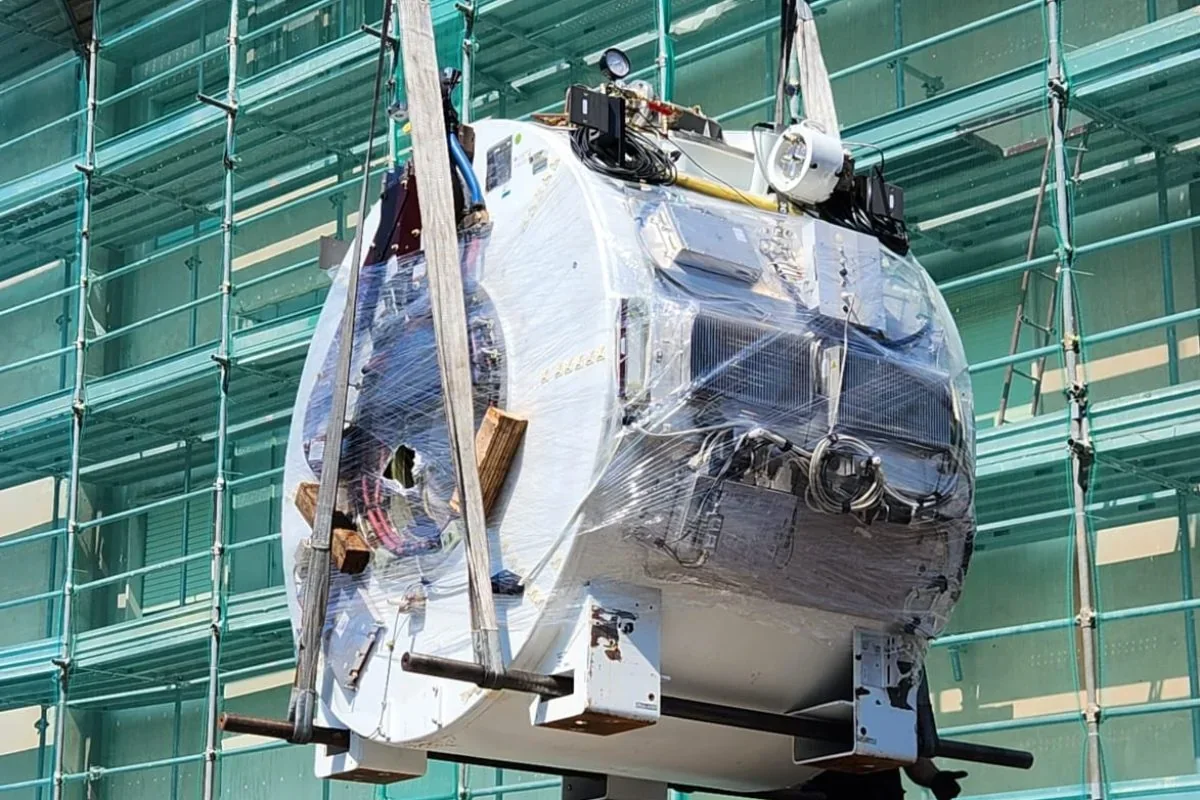
Site entrance, openings, corridors, lifts, ramps and load limits may affect the sequence. Temporary work, removals, protection or lifting equipment may be required. These elements should be identified before responsibilities and timing are fixed.
Moving is more than transport. It is the coordinated passage of the system to the agreed position and requires reliable equipment and route data.
Connect utilities and technical interfaces
Interfaces depend on the technology and system. Electrical data, cooling, ventilation, network, technical spaces and other provisions must come from the correct documentation and be coordinated with the relevant professionals.
MRI systems may also have magnet-specific and cryogenic dependencies. These must not be generalised or approached without an appropriate technical scope.
Define roles and sequence
A clear plan identifies who provides information, performs building work, manages access and site safety, and which activities are included in Spinergy Medical’s support. Stages after positioning should be stated separately.
This guide is introductory and does not replace system documentation, surveys or professional checks required by the project.
Information to prepare
- manufacturer, model and configuration;
- available technical documentation;
- plans and main measurements;
- floor, access and moving route;
- utility and building-work information;
- target timing;
- facility technical contacts;
- activities you want to include.
Explore planning and installation or send the initial information through the contact page.