
Deinstallation and end of life
Imaging equipment deinstallation: information and pathway
Removing an MRI or CT system is not one isolated action: it connects system data, exit route, responsibilities and the equipment’s next destination.
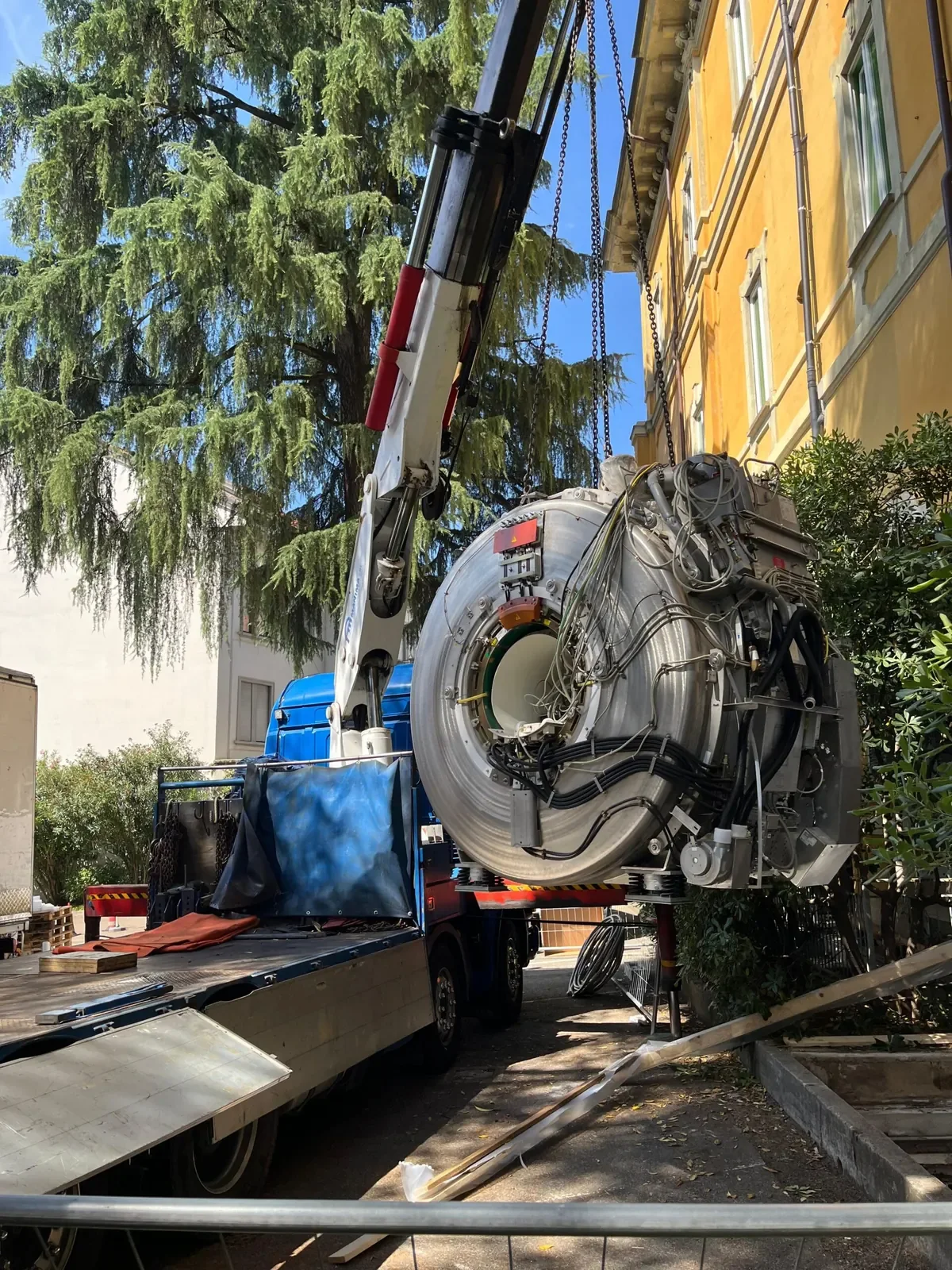
Deinstalling imaging equipment is more than moving it out of the room. Before work starts, clarify which system is being removed, how it is configured, which connections are present, which exit route will be used and where the equipment is going next.
This information supports a sequence and separates responsibilities, included work and outstanding checks.
Identify the system and destination
Manufacturer, model, configuration, dimensions and available documentation form the first information set. At the same time, state whether the equipment is intended for sale, reuse, relocation, storage or an end-of-life pathway.
Destination affects packaging, moving, documentation and stakeholders. It should not remain implicit until removal day.
Review the room and exit route
Information is needed on the floor, openings, corridors, lifts, ramps, load limits and manoeuvring areas. Photographs and plans help initially, but further surveys may be required.
Temporary work, protection of the environment, interfaces with facility operations and vehicle access must also be considered.
Coordinate disconnections and preparation
Technical activities depend on the technology and system. Connections, utilities, components and operating condition must be assessed with the relevant specialists. Specialist work must not be inferred from a generic model description.
For MRI, magnet information and available conditions may significantly change the pathway. Feasibility is therefore confirmed only after the necessary data have been collected.
Plan moving and handover
Sequence, equipment, packaging, loading point and responsibilities must be agreed. The availability of external areas and operating hours may also affect the programme.
If the equipment is intended for reuse, distinguish the elements needed to preserve configuration from those relating only to removal.
Assess reuse or end of life
Potential reuse depends on the system, condition, documentation, demand and project costs. Not every machine is necessarily relocatable, and age alone does not automatically determine end of life.
Applicable environmental and documentary pathways must be defined with the responsible parties for the specific case.
Initial checklist
- identifiers and configuration;
- room, floor and exit route;
- dimensions, openings and load limits;
- target date and operating constraints;
- intended destination;
- technical contact and stakeholders;
- available documents and photographs.
Explore deinstallation and end of life or request an initial assessment through contact.